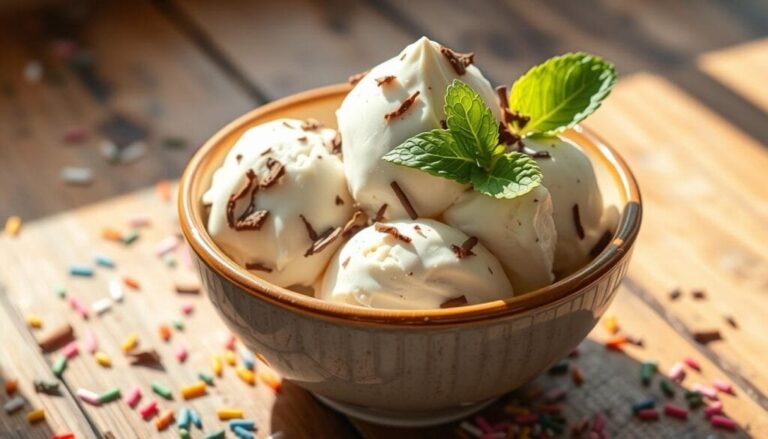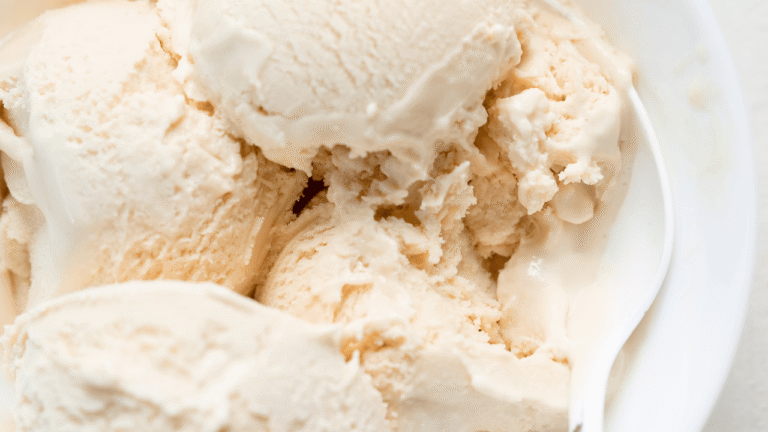


Simple Vanilla Ice Cream
4
servings30
minutes40
minutes300
kcal1
hour10
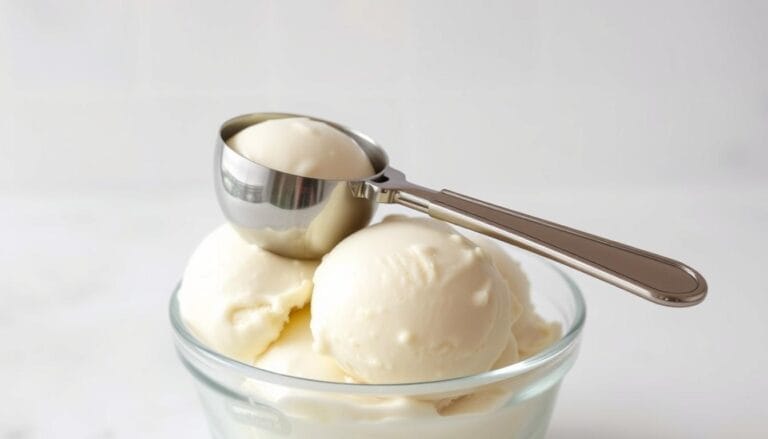
minutesEasy homemade vanilla ice cream with everyday ingredients.
Keep the screen of your device on
Ingredients
2 cups 2 heavy cream
1 cup 1 whole milk
0.75 cup 0.75 granulated sugar
1 tablespoon 1 pure vanilla extract
1 pinch 1 salt
Directions
- In a medium mixing bowl, whisk together the heavy cream, whole milk, and granulated sugar until the sugar is completely dissolved.
- Add pure vanilla extract and a pinch of salt to the mixture, whisking until well blended to infuse flavor evenly.
- Cover the mixture with plastic wrap and chill in the refrigerator for at least 2 hours or overnight for the best consistency.
- Set up your ice cream maker as per manufacturer instructions, ensuring the bowl is pre-frozen if required.
- Pour the chilled mixture into the ice cream maker and churn for about 20-25 minutes or until it reaches soft-serve consistency.
- Transfer the churned ice cream into an airtight container using a spatula, smoothing the surface for even freezing.
- Cover the surface with waxed paper or plastic wrap to prevent ice crystals from forming, then seal the container with a lid.
- Freeze the ice cream for at least 4 hours or until fully set for a perfect scoopable texture.
Recipe Video
Nutrition Facts
- Total number of serves: 4
- Calories: 210kcal
- Cholesterol: 50mg
- Sodium: 40mg
- Potassium: 132mg
- Sugar: 18g
- Protein: 3g
- Vitamin A: 500IU
- Vitamin C: 0mg
- Calcium: 100mg
- Iron: 0mg
- Vitamin D: 6mg
- Vitamin E: 0mg
- Vitamin K: 0mg
- Thiamin: 0mg
- Riboflavin: 0mg
- Niacin: 0mg
- Vitamin B6: 0mg
- Vitamin B12: 0mg
- Folate: 0mg
- Biotin: 0mg
- Pantothenic Acid: 0mg
- Phosphorus: 0mg
- Iodine: 0mg
- Magnesium: 0mg
- Zinc: 0mg
- Selenium: 0mg
- Copper: 0mg
- Manganese: 0mg
- Chromium: 0mg
- Molybdenum: 0mg
- Chloride: 0mg
Did you make this recipe?
Tag @https://www.instagram.com/ice_cream_haven/ on Instagram and hashtag it with #IceCreamIceCreamHavens
Like this recipe?
Follow @https://www.pinterest.com/Ice_Cream_Haven/ on Pinterest
Join our Facebook Group!
Follow https://www.facebook.com/icecreamhavens/ on Facebook
Discovering the Delight: An Overview & Benefits
Fruit custard is a simple, crowd-pleasing dessert that pairs a silky custard base with fresh fruits for bright flavor and texture. Loved from childhood through festive gatherings, this custard is easy to adapt—use traditional custard powder with dairy milk for a classic finish or swap in plant-based milk for a vegan-friendly version.
What Makes It a Timeless Treat
The appeal of this custard lies in its straightforward technique and adaptable flavor profile. A base made with custard powder and milk becomes a velvety canvas for seasonal fruits and flavorings like vanilla or cardamom. It’s quick to prepare and simple to customize, which is why the custard remains a staple at family tables and celebrations.
Modern tweaks—such as cutting back on sugar or choosing almond or oat milk—let you tailor the dessert to dietary needs without losing that smooth custard texture. With minimal time and ingredients, you can create a dessert that feels both nostalgic and fresh.
Nutritional Perks and Festive Appeal
Beyond taste, fruit custard can offer nutritional value when you choose vitamin-rich fruits. For example, mango adds vitamin A and C, while pomegranate seeds provide antioxidants and a pleasant crunch. Combining milk with fresh fruits boosts the dessert’s calcium and vitamin content compared with many other sweet treats.
The colorful mix of fruits—apples, mango, pomegranate, citrus fruits, or grapes—also makes the custard visually striking, ideal for special occasions. Read on to make this fruit custard recipe (the active prep time is short) and follow the step-by-step guide to achieve a smooth, lump-free custard ready to pair with your favorite fruit salad.
Step-by-Step Guide to Crafting Your Custard

The secret to a perfect fruit custard is attention to simple details: the right temperatures, steady stirring, and the anti-lump technique. Follow the numbered steps below to make a smooth, lump-free custard base you can pair with any fruit mix or fruit salad.
Preparing the Custard Base
1. Heat 3 cups milk in a saucepan over medium heat until it is steaming (small bubbles forming around the edges) — do not bring it to a full boil.
2. Add ⅓ cup sugar and stir until fully dissolved (about 3–4 minutes). Taste and adjust sweetness as needed.
3. In a separate bowl, sift or whisk 4 tablespoons custard powder with a few tablespoons of warm milk to form a smooth slurry — no lumps. Using warm milk (not hot) prevents the powder from clumping immediately.
Mixing Techniques for a Smooth Consistency
4. When the milk is hot, reduce heat to low and slowly pour the slurry into the saucepan in a steady stream, whisking continuously to maintain an even mix. Adding the slurry in batches helps prevent lumps.
5. Cook the mixture, stirring constantly, for 2–3 minutes after it begins to thicken. You’ll know it’s ready when the custard coats the back of a spoon and leaves a clear line when you run your finger through it — that’s the right consistency.
6. Remove from heat and let the custard cool slightly (15–20 minutes) before flavoring or adding fruit. Cooling first prevents water release from fresh fruit that can make the custard runny.
Tip: If using cornstarch as a substitute, use about 3 tablespoons cornstarch for every 4 tablespoons custard powder (adjust to taste). Sift the starch first, and make a slurry just like with custard powder — texture will be slightly different (a bit clearer, less yellow), but still creamy.
Troubleshooting quick fixes: If you get small lumps, immediately strain the hot custard through a fine mesh sieve and whisk vigorously; for a too-thin custard, return to low heat and cook a minute longer while stirring; if it sticks/burns, discard and start fresh (burnt flavor cannot be removed).
With these steps you’ll be able to make custard that’s silky and stable — perfect for assembling your fruit custard recipe. Proceed to the next section to choose fruits and learn the best assembly and chilling tips for serving.
Fruit Custard Fruits: Key Ingredients & Techniques
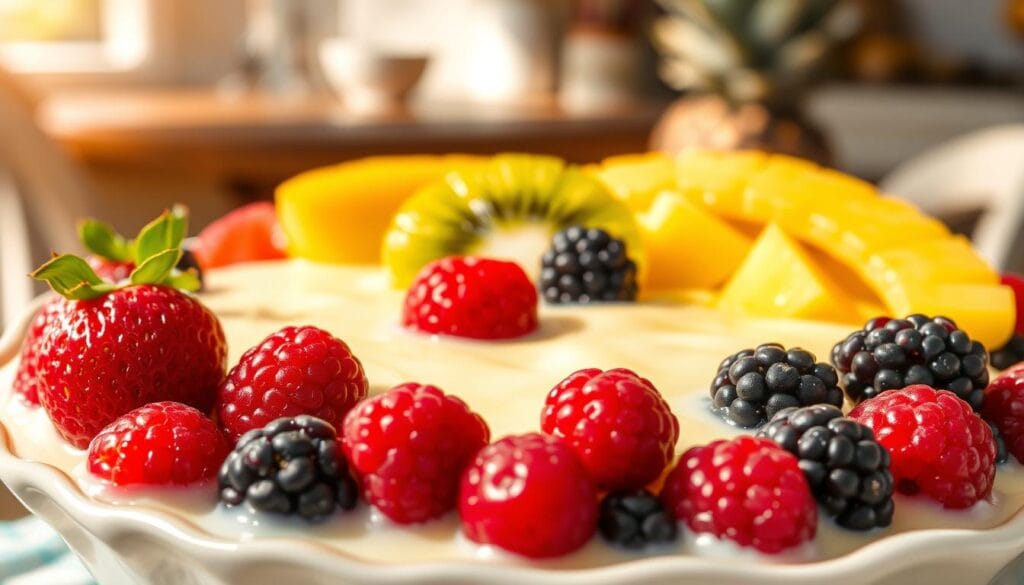
Great fruit custard starts with fresh ingredients and a few simple techniques. Choose quality milk and ripe fruits, handle thickeners carefully, and follow timing cues to preserve texture and flavor. Below are practical selection tips, substitution ratios, and flavor ideas to help you make fruit custard that’s consistently delicious.
Selecting the Freshest Seasonal Fruits
Pick fruits that are ripe but firm to avoid excess moisture. Seasonal choices work best: summer mangoes for sweetness and body; autumn apples and pomegranate for crunch and antioxidant-rich seeds; citrus fruits (orange or tangerine segments) for brightness. Avoid very watery fruits (like overly ripe melon) unless you drain them first — instead, add them just before serving.
Quick do/don’t:
- Do: use mango, apple, banana, grapes, pomegranate, and citrus fruits for a balanced texture and flavor.
- Don’t: add high-moisture fruits straight from the fridge without patting dry, and avoid using very underripe or overly sour pieces that can throw off taste.
Mastering Custard Powder and Its Alternatives
Traditional custard powder is convenient and gives the classic yellow color and flavor. If you prefer a neutral base, cornflour (cornstarch) or arrowroot are fine substitutes. Use these approximate substitution ratios and techniques:
- Custard powder: use as directed (e.g., 4 tablespoons in this recipe).
- Cornflour/cornstarch substitute: use about 3 tablespoons cornstarch for every 4 tablespoons custard powder — the texture will be slightly clearer and less flavored.
- Arrowroot: similar swap as cornstarch; it sets at lower temperatures and can give a silkier mouthfeel for chilled desserts.
Always mix the chosen powder into a small amount of cold or warm milk to form a smooth slurry before adding to hot milk. This prevents lumps and ensures an even, creamy custard.
Practical Flavoring: Vanilla, Cardamom, and Nuts
A few drops of vanilla extract will brighten the custard; use vanilla (about 1 tsp) for a classic profile. For an aromatic twist, try crushed cardamom or a tiny splash of almond essence. If adding nuts, toast sliced almonds or chopped cashews briefly to bring out flavor — sprinkle them on top just before serving so they stay crunchy.
Assembly Tips & Chilling
Let the custard cool for 15–20 minutes after cooking, then add fruit so the pieces keep their structure and the custard doesn’t become watery. For the best set and melded flavors, chill the assembled fruit custard for at least 1–2 hours — longer chilling (up to several hours) will thicken the mixture and deepen flavors.
Want to make fruit custard for a crowd? Assemble in a large bowl for family-style serving, or layer custard and fruit in individual cups for a pretty presentation. You can also add a handful of toasted nuts or pomegranate seeds on top just before serving to add color and crunch.
With these ingredient choices and techniques — from correct custard powder handling to smart fruit selection and chilling — you’ll consistently make fruit custard that’s creamy, flavorful, and visually appealing.
Creative Presentation and Serving Ideas

Elevate your fruit custard by paying attention to how you plate, garnish, and serve. A few thoughtful touches—textural contrast, seasonal accents, and tidy presentation—turn a simple custard into a memorable centerpiece for brunches, family dinners, or celebrations.
Garnishing with Nuts, Dry Fruits, and Spices
Garnishes add crunch, color, and flavor. Sprinkle chopped almonds or toasted cashews for texture; if you prefer seeds, toasted pumpkin or sunflower seeds are a nut-free alternative. Pomegranate seeds and thin orange slices provide bright color and a sweet-tart pop that pairs well with the creamy custard. Finish with a light dusting of cinnamon or cardamom for warm aromatic notes. Always add delicate garnishes just before serving to keep them crisp.
Three Serving Styles to Try
- Layered parfaits: In clear glasses, alternate custard and chopped fruits (mango in summer, apple and pomegranate in fall) to showcase color and layers.
- Family-style bowl: Mix custard and a medley of fruits (banana, grapes, apple, pomegranate) in a large bowl for casual gatherings—finish with toasted nuts on top.
- Individual cups: Spoon chilled custard into small cups and top each serving with a few seeds, a mint leaf, or a drizzle of chocolate for an elegant touch.
Pairings & Event Tips
For brunch, pair fruit custard with a light fruit salad and some crisp biscuits; a sprinkle of flour-based crumbles (shortbread or digestive cookie crumbs) adds desirable crunch. For dessert-only events, keep portions small—serve in individual cups or small bowls so guests can sample multiple sweets. If you want a slightly sweeter finish, add sugar sparingly to taste, but remember that ripe fruits often contribute plenty of natural sweetness.
Quick Plating Checklist
- Chill custard for at least one hour (longer for a firmer set).
- Prepare and pat-dry fruits to avoid extra moisture.
- Assemble just before guests arrive and add garnishes last to preserve crunch.
With these presentation ideas—seasonal garnishes, three clear serving styles, and a quick checklist—you can make fruit custard both beautiful and delicious. Whether served in a family-style bowl or as elegant parfaits, your dessert will look as good as it tastes.
Conclusion
Making a creamy, refreshing fruit custard is straightforward when you focus on three things: correct heat control, steady mixing, and proper cooling. Follow the steps above to get a smooth, lump-free custard base, then add fresh fruit at the right moment to preserve texture and flavor.
Try small flavor tweaks—like a teaspoon of vanilla or a few crushed cardamom pods—and garnish with toasted nuts for contrast. Serve individual portions in a small bowl or cups for elegant presentation, or use a large bowl for family-style serving.
Fruit custard can also be adapted to dietary needs: use low-fat milk or plant-based milk to make vegan or lower-calorie versions, and reduce sugar to taste. Packed with natural vitamins from the fruit and calcium from milk, it’s a dessert that can feel both indulgent and nourishing. Chill assembled custard for at least 1–2 hours before serving for best results.
FAQ
What makes this dessert a timeless treat?
How can I ensure a smooth consistency when preparing the base?
What are the best fruits to include for a vibrant mix?
Can I use alternatives to traditional custard powder?
How can I elevate the presentation for special occasions?
Is this dessert suitable for health-conscious individuals?