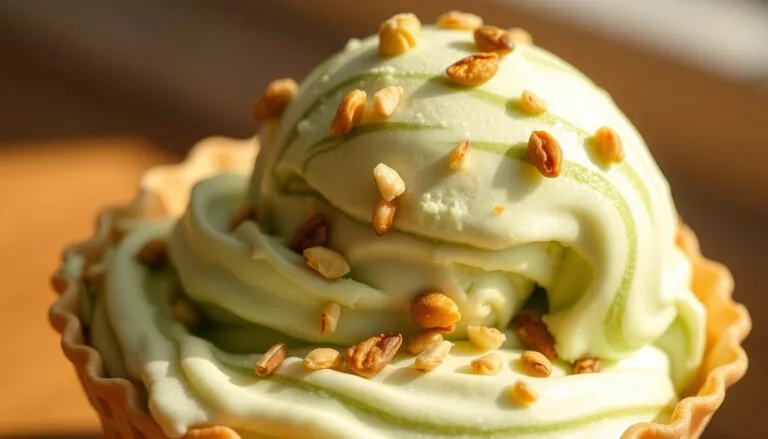


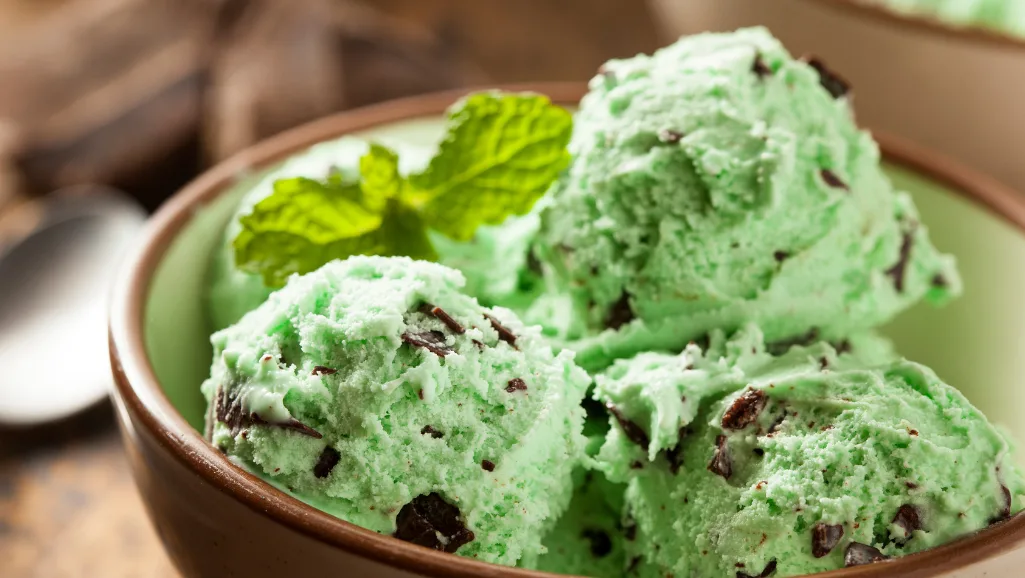
Matcha White Chocolate Chip Ice Cream
4
servings30
minutes40
minutes300
kcal1
hour10
minutesDelicious homemade matcha ice cream with white chocolate chips.
Keep the screen of your device on
Ingredients
2 cups 2 heavy cream
1 cup 1 whole milk
0.75 cup 0.75 granulated sugar
1 tablespoon 1 matcha green tea powder
0.5 teaspoon 0.5 vanilla extract
0.5 cup 0.5 white chocolate chips
Directions
- Whisk together the heavy cream, whole milk, and granulated sugar in a medium saucepan over medium heat until the sugar dissolves completely.
- Remove the saucepan from the heat and whisk in the matcha green tea powder and vanilla extract until smoothly combined.
- Pour the mixture into a bowl and let it cool to room temperature. Then cover and chill in the refrigerator for at least 2 hours.
- Pour the chilled mixture into an ice cream maker and churn according to the manufacturer's instructions, usually about 20-25 minutes.
- Add the white chocolate chips during the last few minutes of churning to ensure they are evenly distributed.
- Transfer the ice cream to an airtight container and freeze for at least 2 hours before serving.
Nutrition Facts
- Total number of serves: 8
- Calories: 250kcal
- Fat: 18g
- Saturated Fat: 11g
- Trans Fat: 0g
- Polyunsaturated Fat: 0.5g
- Monounsaturated Fat: 5g
- Cholesterol: 60mg
- Sodium: 40mg
- Potassium: 100mg
- Carbohydrates: 22g
- Fiber: 0g
- Sugar: 18g
- Protein: 3g
- Vitamin A: 600IU
- Vitamin C: 1mg
- Calcium: 80mg
- Iron: 1mg
- Vitamin D: 2mg
- Vitamin E: 0.5mg
- Vitamin K: 2mg
- Thiamin: 0.05mg
- Riboflavin: 0.1mg
- Niacin: 0.2mg
- Vitamin B6: 0.01mg
- Vitamin B12: 0.4mg
- Folate: 5mg
- Biotin: 2mg
- Pantothenic Acid: 0.3mg
- Phosphorus: 80mg
- Iodine: 5mg
- Magnesium: 10mg
- Zinc: 0.5mg
- Selenium: 2mg
- Copper: 0.1mg
- Manganese: 0.1mg
- Chromium: 0mg
- Molybdenum: 0mg
- Chloride: 70mg
Did you make this recipe?
Tag @https://www.instagram.com/ice_cream_haven/ on Instagram and hashtag it with #IceCreamIceCreamHavens
Like this recipe?
Follow @https://www.pinterest.com/Ice_Cream_Haven/ on Pinterest
Join our Facebook Group!
Follow https://www.facebook.com/icecreamhavens/ on Facebook
Why Matcha and White Chocolate Are a Can’t-Miss Pairing
This pairing turns a simple cookie into a balanced bite where grassy notes meet mellow, milky sweetness. The green powder brings an earthy depth that keeps rich, creamy pieces from becoming one-note.
Flavor logic: the earthiness tames the sugar so every bite tastes intentional and modern. That contrast makes the overall taste rounded instead of overly sweet.
Texture matters: aim for lightly crisp edges with a chewy center. That contrast of textures amplifies the flavor and makes the cookies feel bakery-level.
“A touch of grassy bitterness makes the milky sweetness sing without overpowering it.”
- Visual appeal: the vibrant green makes these cookies special for gifts and gatherings.
- Why it works: mild, creamy bits let the powder shine while softening any bitterness.
- Serving ideas: pair with tea, coffee, or a latte to elevate a regular cookie night.
Note: powder quality and oven temp influence final color and flavor, so choose ingredients and tools with care.
Matcha White Chocolate Chip Cookies Ingredients Checklist

A tidy checklist of dry and wet components sets you up for bakery-style cookies at home. Below is a focused mise en place so you can shop and prep without stress.
Dry ingredients
- All-purpose flour — gives structure and crumb.
- Baking soda — encourages spread for thin, tender edges (use soda only for the standard version).
- Salt — amplifies overall flavor and balances sweetness.
- Matcha powder — adds color and herbal balance against the sugar. Use culinary grade for baking.
- Optional: milk powder — a secret boost for extra milky richness if you want deeper, creamier notes.
Wet ingredients
- Butter — provides chew and browning; softened or brown butter both work.
- Sugars (granulated + brown) — sugar mix controls spread and chew.
- Eggs — bind and add moisture.
- Vanilla extract — rounds flavors and flatters the green tea notes.
The chocolate choice
White chocolate chips keep distinct pieces and a neat bite. Chopped bar pieces melt into creamier pools and make irregular pockets of richness. Choose chips for a uniform look or chopped chunks for oozy centers.
Final notes on dough
Mix until you have a cohesive green dough before folding in the chocolate. That signals proper hydration and mixing. For a thicker cookie, some versions add baking powder along with soda; for a classic spread, use soda only.
Ready to bake? For a complete, tested recipe click this recipe page for step-by-step guidance and exact measurements.
Choosing Matcha Powder for Color and Flavor (Culinary Grade and Beyond)

A quick powder choice can change everything. In baking, the powder you pick affects color, bitterness, and aroma. Use this short guide to match your budget and the look you want.
How quality affects aroma and taste
Vibrant green powder bakes into brighter cookies and tastes smoother. Lower-quality powder often looks yellow-green and can turn slightly bitter or brown when overbaked.
Practical differences between grades
- Ceremonial: most vibrant and smooth; best if you want bold color and clean flavor.
- Latte: bright, slightly bitter; a good middle ground for color without overspending.
- Culinary grade: muted and more bitter, but it works fine for everyday baking and is budget-friendly.
Storing powder to keep it fresh now
Seal opened powder in an airtight container, remove excess air, and refrigerate. Use within 1–2 days for best aroma if using daily, or within 1–2 months after opening for occasional use.
“Buy smaller amounts if you bake infrequently; freshness keeps the green and the scent alive.”
For more ideas on how to use higher-grade powder in desserts, see creative ways to bake with matcha.
Tools That Make This Cookie Recipe Foolproof

Great tools remove guesswork so your batch looks and bakes like it came from a neighborhood bakery.
Mixing basics
Start with two clean bowls: one for dry and one for wet. Use a whisk to distribute powder and leaveners evenly. A flexible spatula folds the dough gently so cookies stay tender.
Size and scooping
A 3–4 tablespoon cookie scoop creates uniform balls. Same-size scoops mean the same bake time and consistent texture across the tray.
Baking sheet setup
Line two baking sheets with parchment paper or parchment for easy release and cleanup. Space dough 2–3 inches apart so they don’t merge as they spread.
Oven accuracy and finishing touches
An oven thermometer is a small investment that protects color and texture. Some ovens run as much as ~50°F off. Use the middle rack and bake one sheet at a time for even results. Check cookies near the end of the listed minutes for perfect edges and soft centers.
- Essentials: bowls, whisk, spatula.
- Uniformity: scoop for same-size dough balls.
- Prep: two baking sheets + parchment paper; space well.
- Control: oven thermometer keeps temperature honest.
Want a tested method to follow next? Try this tested recipe for step-by-step baking guidance.
Prep Notes That Set You Up for Bakery-Style Results

A few careful steps before you mix will dramatically improve texture, color, and consistency. Prep matters: the room and ingredient temps make the biggest difference in how your cookies bake and feel.
Room temperature eggs and butter handling
Use room temperature eggs so they blend smoothly into the batter. Softened butter combines with sugar to create a light, stable mixture that traps air for a tender center.
If you brown butter, let it cool to room before adding eggs. Never mix hot butter with eggs — it can cook them and make the dough greasy.
Sift the matcha powder
Sift matcha powder through a fine mesh to remove clumps. This keeps the dough an even, vibrant green and prevents bitter pockets in final bites.
Measure flour with care
Weigh or spoon-and-level your flour. Small changes to flour control spread and thickness. Proper measuring helps the dough hold shape and yields consistent bakery-style results in the oven.
“Good prep trims guesswork and makes every tray bake like it belongs in a bakery.”
Mixing the Cookie Dough for the Best Texture

A gentle, timed mixing method is the secret to cookies that rise, spread, and chew exactly right. Follow a clear sequence to protect the dough’s structure and keep the colors and flavors bright.
Combine dry ingredients first
Whisk the flour, powder, salt, and green powder together until fully blended. This disperses leaveners and prevents streaks when they meet the wet mix.
Cream sugars and butter until light
Cream butter and sugars for about 3–4 minutes with a mixer, or whisk until pale and fluffy in an electric whisk. Look for a paler color and a slightly puffed texture — that means air is trapped and will yield thicker cookies.
Add eggs and vanilla smoothly
Beat in eggs and vanilla at low speed, scraping the bowl so everything stays even. Mix just until combined; this keeps the batter cool and cohesive.
Finish with restraint and a gentle fold
Add the dry mix until only a few streaks remain, then switch to a spatula. Fold in the chips gently to preserve aeration. Overmixing will warm the dough and flatten your cookies.
- Sequence tip: dry first, wet second, then combine.
- Timing: aerate but don’t overwork — a few minutes is enough.
- Final touch: fold gently so cookies bake thick and evenly studded.
“Cream until pale, mix just until combined, then fold — that rhythm makes bakery-style cookies.”
Resting, Chilling, and Dough Control for Your Ideal Cookie
Letting cookie dough rest gives flour time to hydrate and flavors time to develop. This simple pause also smooths texture so trays bake more evenly and with fewer surprise spreads.
When to chill and why it helps
Resting for at least one hour firms the dough so it holds shape in the oven. Longer resting—24 to 72 hours—deepens flavor and improves consistency. If the dough feels warm or sticky, chilling is your control switch for thickness.
Thickness dial: thicker vs flatter cookies
Want thicker cookies? Chill longer so the butter melts more slowly and the dough keeps height. For flatter cookies, keep dough closer to room temperature and rest less.
Make-ahead and timing tips
You can refrigerate portioned dough for 1–3 days for a more reliable bake. Freeze dough balls for longer storage and bake from frozen; add a few extra minutes and run a small test tray to find your oven’s sweet spot.
“A little patience in the fridge is the easiest trick for bakery-style results.”
- Resting gives flour time to hydrate for even baking.
- Colder dough slows butter, reducing spread and protecting chew.
- Plan ahead: refrigerate for days or freeze for quick baking emergencies.
Baking at 350°F: Timing, Color Cues, and Doneness
Timing and visual cues in the oven are the final, quiet skills that turn good dough into bakery-level cookies.
What to watch for while they bake
Look through the oven window for edges that look set and just turning lightly golden. The centers should still look soft and slightly underdone.
Practical bake times and why ovens differ
Bake at 350°F on the middle rack. Expect ~10–12 minutes for smaller scoops and ~12–14 minutes for larger scoops. Minutes will shift with scoop size, dough chill, and oven calibration.
One sheet at a time and simple fixes
Use one baking sheet at a time on the middle rack for even heat and to protect the cookie color. An oven thermometer helps keep the temperature honest and prevents excess browning that dulls matcha color.
“Cookies finish setting as they cool — pull them when centers are soft for the best chew.”
- Rotate pans only if you see hot spots in your oven.
- Watch edges, not just the clock; minutes are a guide.
- Start with vibrant matcha powder and correct heat to keep color bright.
Cooling, Shaping, and Picture-Perfect Finishing Touches
The final minutes after baking are where texture and presentation meet. Let the tray rest so each cookie firms up before you move it. A brief pause keeps centers chewy and edges intact.
Let cookies cool on the baking sheet, then move to a rack
Cool on the baking sheet about 10 minutes. The hot cookies are fragile right away. That short wait helps the dough finish setting so they lift cleanly.
After ten minutes, transfer to a wire rack. The rack stops residual heat from overbaking and protects the soft centers.
Swirl with a round cutter or glass for perfect shape
For bakery rounds, immediately after baking use a round cutter or glass. Gently swirl the rim around each warm edge. This nudges irregular edges into neat circles without smashing the cookie.
Press extra pieces on top for bakery vibes
Press a few extra white chocolate chips or small chunks on top in the last couple of minutes, or right after the tray comes out. This makes the chips look intentional and photogenic.
- Parchment paper or parchment prevents sticking and makes lifting easier.
- Stack on a plate for gifting, pack for lunchboxes, or serve warm with tea.
- One sheet at a time keeps heat even and results consistent.
“A calm, careful finish turns a good batch into a giftable one.”
Conclusion
Small choices — powder grade, chill time, and oven cues — unlock consistent, vibrant cookies.
The big win: with good powder, careful mixing, and controlled baking, these cookies stay soft, chewy, and beautifully green.
Key technique takeaways: sift the powder, measure flour precisely, and pull trays when edges are set but centers still look soft. Adjust chill time for thicker versus flatter results, and pick chips or chopped pieces depending on whether you want neat studs or melty pockets.
Storage and make-ahead: keep baked cookies in an airtight container at room temperature for about 3–5 days, refrigerate up to ~7 days, or freeze for 1–3 months. Freeze portioned dough balls and bake from frozen with a few extra minutes.
Pro tip: tuck a small piece of white bread into the container to keep soft cookies tender longer. For more tips and background, learn more.
Now bake: with the right tools, timing, and a little matcha magic, your next batch can feel like a small celebration.
FAQ
What grade of matcha powder should I use for best color and flavor?
How do I prevent clumps of powder in the cookie dough?
Can I use chopped bars instead of chips for a more indulgent texture?
Should I chill the dough, and for how long?
What oven temperature and bake time give soft centers with crisp edges?
Do I need an oven thermometer?
How should I measure flour to avoid dense cookies?
Can I use brown butter instead of softened butter?
What’s the best way to get evenly sized cookies?
How do I store the cookies so they stay fresh several days?
Can I add milk powder for extra richness?
Any tips for getting perfectly round cookies?