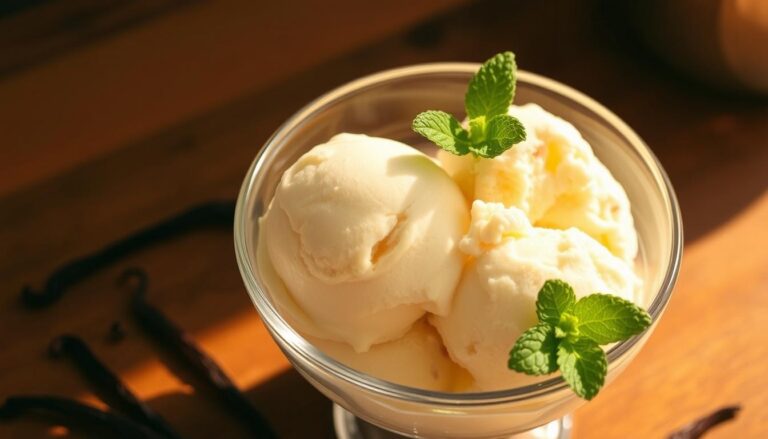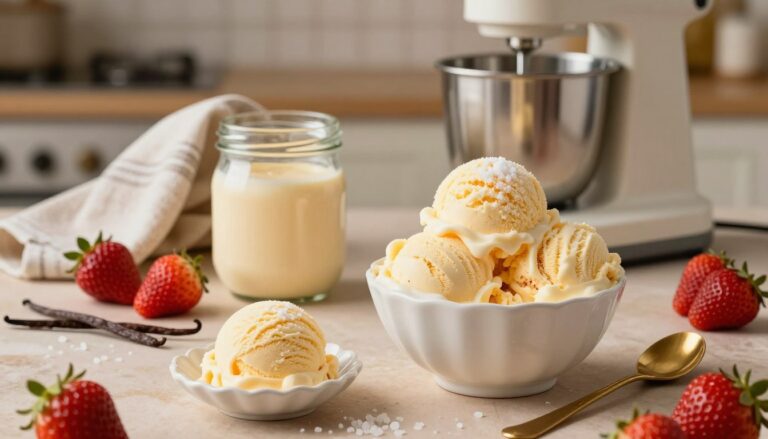



Classic Vanilla Ice Cream
4
servings30
minutes40
minutes300
kcal1
hour10
minutesA simple, homemade vanilla ice cream recipe.
Keep the screen of your device on
Ingredients
2 cups 2 heavy cream
1 cup 1 whole milk
3/4 cup 3/4 granulated sugar
1 tablespoon 1 vanilla extract
1 pinch 1 salt
Directions
- In a large mixing bowl, whisk together the heavy cream, whole milk, granulated sugar, vanilla extract, and salt until the sugar is completely dissolved.
- Cover the bowl with plastic wrap and refrigerate for at least two hours, or until the mixture is thoroughly chilled.
- Once chilled, pour the mixture into your ice cream maker according to the manufacturer's instructions.
- Churn the ice cream for about 20 to 25 minutes or until it reaches a soft serve consistency.
- Transfer the churned ice cream into an airtight container and freeze for at least 2 hours for a firmer texture before serving.
Nutrition Facts
- Total number of serves: 6
- Calories: 280kcal
- Cholesterol: 80mg
- Sodium: 40mg
- Potassium: 138mg
- Sugar: 20g
- Protein: 3g
- Calcium: 100mg
- Iron: 0mg
- Thiamin: 0mg
- Riboflavin: 0mg
- Niacin: 0mg
- Folate: 0mg
- Biotin: 0mg
- Phosphorus: 0mg
- Iodine: 0mg
- Magnesium: 0mg
- Zinc: 0mg
- Selenium: 0mg
- Copper: 0mg
- Manganese: 0mg
- Chromium: 0mg
- Molybdenum: 0mg
- Chloride: 0mg
Did you make this recipe?
Tag @https://www.instagram.com/ice_cream_haven/ on Instagram and hashtag it with #IceCreamIceCreamHavens
Like this recipe?
Follow @https://www.pinterest.com/Ice_Cream_Haven/ on Pinterest
Join our Facebook Group!
Follow https://www.facebook.com/icecreamhavens/ on Facebook
Why This Old-Fashioned Vanilla Ice Cream Feels Like Summer
The rhythm of the churn and the scent of real vanilla turn a dessert into a memory. That steady sound, the clink of ice, and the first cold bite instantly call up July evenings on the porch.
Perfect for backyard BBQs and potlucks, this vanilla ice cream shines because it serves a crowd and pairs with almost any summer dessert. Families love it for being familiar and easy to serve.
Many households pass down this approach through generations. Churning together becomes part of the celebration, not just a task. The classic machine with ice and rock salt makes the process as much a ritual as the result.
- Big-batch friendly — feeds a crowd without fuss.
- Universally liked flavor — a safe hosting win for family gatherings.
- Simple base — keeps the focus on texture and real vanilla.
Make it yours: keep the base pure for tradition, or fold in mix-ins after churning. Either way, you’ll end service with a nostalgic dessert that feels special and relaxed.
Equipment and Setup for an Old-Fashioned Ice Cream Maker
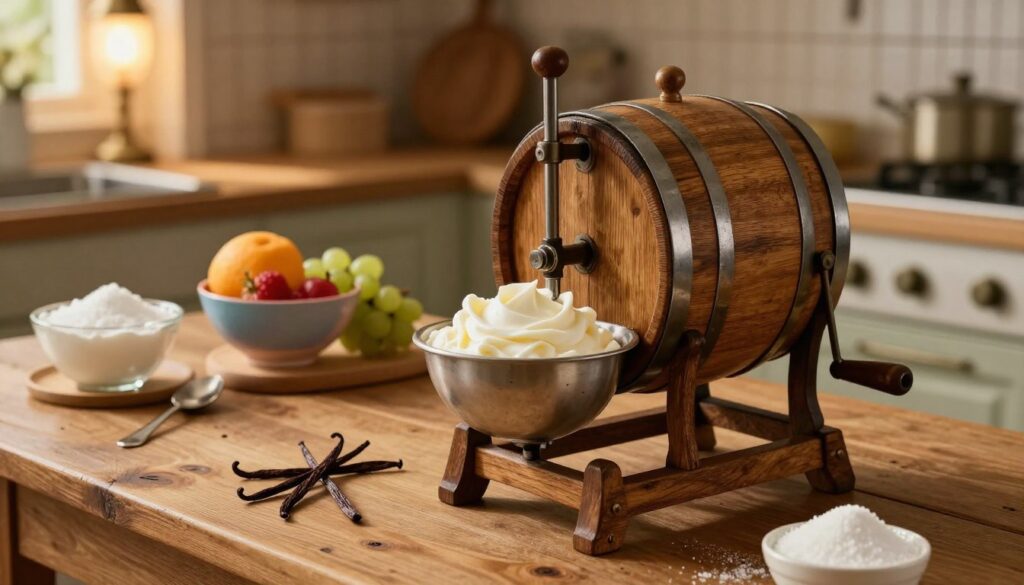
Set up your machine where melting water can run free and the churn can work without fuss. A reliable station makes churning simple and keeps salty melt from ruining floors or counters.
Must-have parts: confirm you have the metal canister, paddle (dasher), lid, motor or hand crank, and the outer bucket that holds ice.
Where to run the maker
Place the unit in a sturdy sink or on a patio. Melting water and salt will drain away, preventing a mess indoors.
Setup success checklist
- Wash and fully dry the metal canister before use.
- Confirm the paddle fits and the lid seals tightly.
- Have extra towels and a drip tray nearby.
Freezing method and rhythm
Layer ice around the canister, sprinkle rock salt, then repeat as it churns. Start with about 4 lb of ice and 1/2 cup rock salt, topping off often.
- Build a base ring of ice around the canister.
- Sprinkle rock salt over the ice.
- Keep adding ice and salt while the motor runs; many batches use 12–16 lb of ice and multiple cups of rock salt.
Operational note: the motor will strain as freezing progresses. When it slows and stops, that is usually your signal that the batch is done.
Ingredients for Creamy Homemade Vanilla Ice Cream
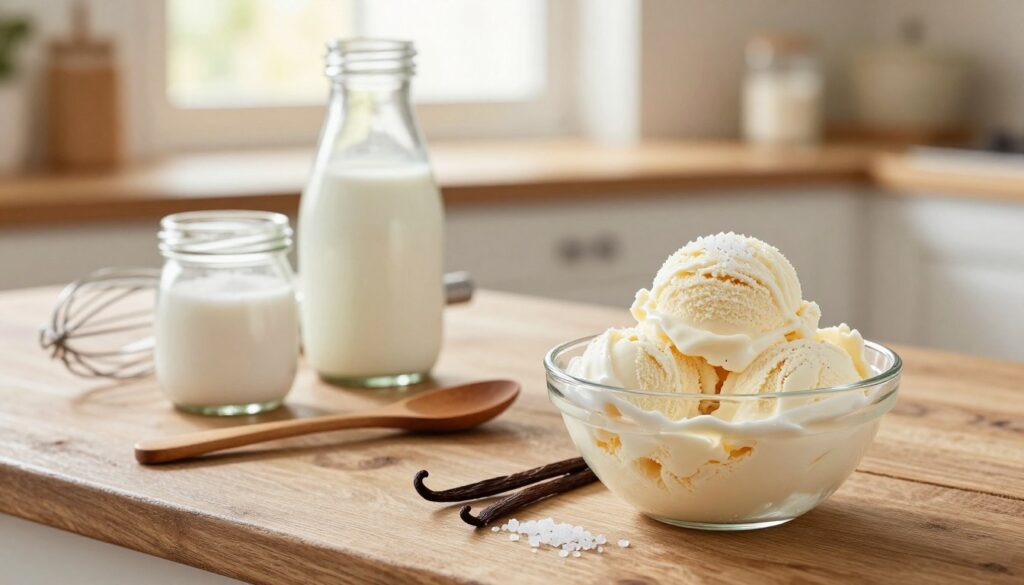
Choose your core dairy and flavor players first — they set the texture and aroma for the whole batch.
Classic custard base: eggs, white sugar, real vanilla, heavy cream, and whole milk. This set creates the familiar, silky mouthfeel that defines custard-style vanilla. A small pinch of salt brightens the flavor without tasting salty.
Pantry upgrades: swap in evaporated milk for extra body or use sweetened condensed milk for a richer, silkier finish. These options are especially handy when you want fewer steps but big flavor.
Choosing vanilla and sweeteners
Always use real vanilla extract for a bold, pure aroma. Mexican vanilla is a lovely choice if you have it. White sugar keeps the taste clean; brown sugar adds a warm, caramel note.
Practical swaps and fat guidance
Higher fat dairy — heavy cream, half-and-half, and whole milk — reduces iciness and yields scoopable texture. Use 2% milk in a pinch, but avoid skim if you want true creaminess.
- Eggs give custard richness; use pasteurized if serving kids or people with sensitivities.
- Salt (just a pinch) lifts the vanilla and cream flavors.
- Once you settle on ingredients, mix thoroughly so the base freezes evenly and every scoop tastes consistent. For a full method, see this homemade vanilla guide.
Old fashioned ice cream recipe Base: Mixing It Smooth and Rich
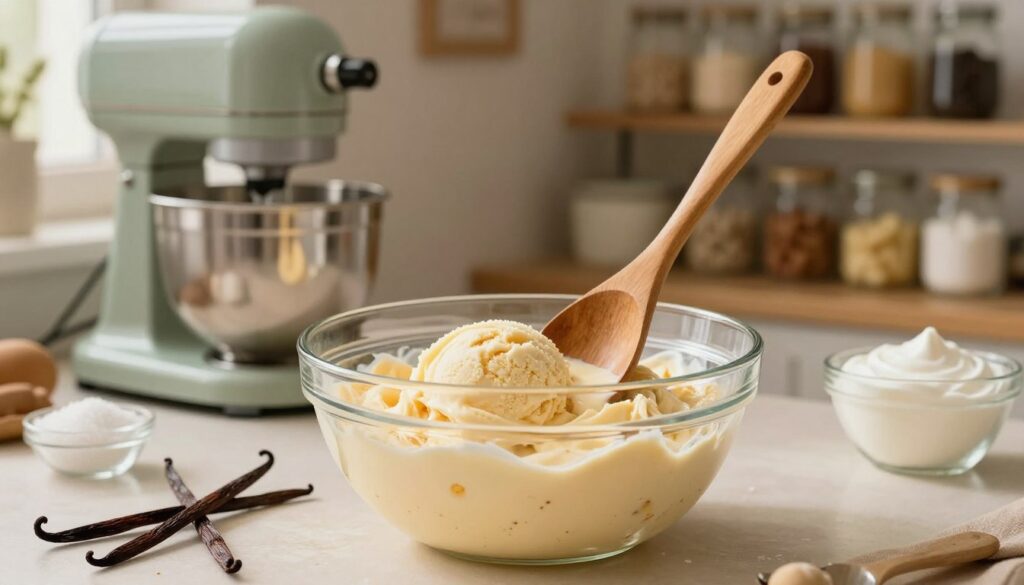
A smooth, well-blended base makes all the difference to the final scoop. Take a few focused minutes to turn separate ingredients into a uniform, creamy mixture. The mixing step is quick, but it defines texture and flavor.
Creaming eggs and sugar for a silky start
Begin by combining the eggs and sugar. Use a mixer or blender and beat for 1–2 minutes until the mixture looks lighter and smoother. This break-up of egg strands helps the finished ice cream feel luxurious.
Two proven routes to a streak-free base
No-cook bowl method: Add milk, cream, and vanilla to the beaten eggs and sugar. Blend 1–2 minutes in the bowl or blender to remove streaks and dissolve any grit. This is the fastest way to make ice cream and saves time when you host.
Warmed-milk method: Gently warm 2 cups of milk until it’s warm but not hot. Slowly whisk a little milk into the eggs, then return the mix to the pan and stir on low for 2–3 minutes. The mixture should thicken slightly without cooking the eggs.
- Aim for a uniform, creamy mixture with no visible egg ribbons.
- Mixing for a couple of minutes distributes vanilla and prevents streaks.
- When the base looks consistent, pour it into the canister and let the maker finish the job.
Step-by-Step: How to Make Ice Cream in the Machine
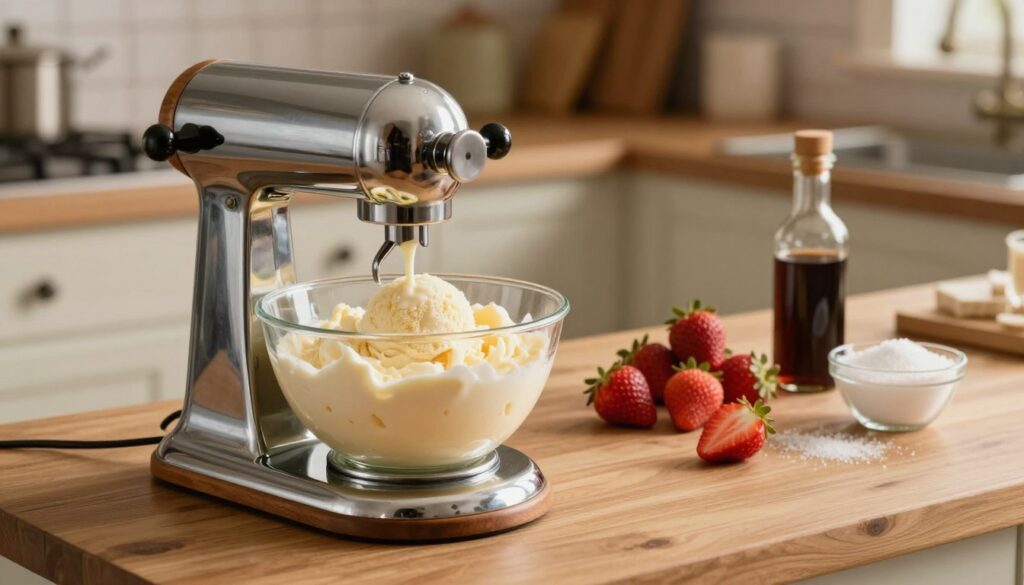
Follow a calm routine and the job becomes joyful — not frantic. Start by positioning the chilled metal container on a stable surface in a sink or on a patio so melt can drain safely.
Fill the container to the line — roughly 3/4 full. Freezing expands the base, so staying below the fill line avoids overflow and frustration.
Churn-start sequence:
- Pour the base into the canister and seat it securely.
- Lock the lid, start the motor on the ice cream maker, then begin building the cold pack.
- Add layers of ice and rock salt around the canister — aim for 12–16 lb of ice and 2–3 cups of rock salt total, topping off as it melts.
Check every few minutes and add more ice and rock salt as needed. You don’t need to hover, but occasional attention keeps the process steady.
Done cue: when the motor slows or stops, unplug immediately — that pause is your sign the dessert reached a firm state.
Before opening, wipe any rock salt and ice from the lid and rim to keep the flavor pure. If not serving right away, remove the motor, repack with ice, wrap towels to insulate the container, and move to the freezer for short holding time.
This clear way turns a smooth base into scoopable joy and shows how to make ice cream with confidence. For more tips, see the ice cream maker guide.
Cooked vs Uncooked Eggs and Food Safety Notes
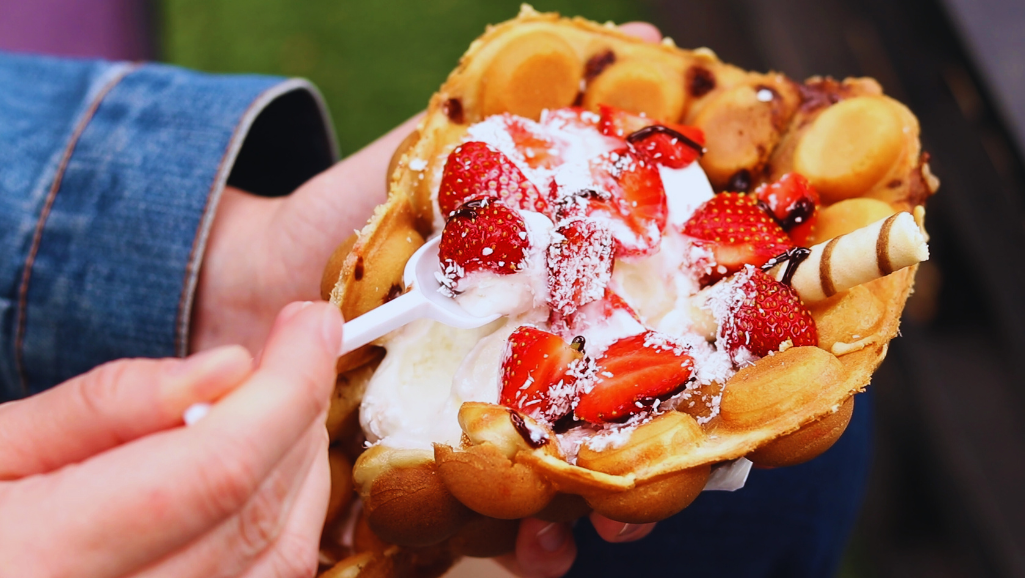
Deciding whether to cook eggs or use them raw comes down to taste, tradition, and safety.
No-cook tradition vs tempering to 160°F for peace of mind
Many family recipes use beaten egg straight into the base. This no-cook route is fast and keeps the texture silkier for some homemade ice lovers.
Tempering means adding warm dairy slowly into beaten eggs, then gently heating the mixture to 160°F. This short, low heat step—often a few minutes—reduces risk while keeping the blend smooth.
“A gentle stir and a quick temperature check can turn a raw base into a safer custard without losing creaminess.”
Using pasteurized eggs and who may want to avoid raw egg
- Safety-forward option: use pasteurized eggs to keep the no-cook method but lower risk.
- Who should avoid raw eggs: pregnant people, young children, older adults, and those with weakened immune systems.
- Quality control: keep dairy cold until mixing, work quickly, and churn promptly so the mixture does not sit at unsafe temperatures.
Choose the method that fits your crowd and comfort level. Either way, short attention to heat and time keeps your homemade ice delightful and safe.
Serving Ideas, Mix-Ins, and Make-It-A-Moment Desserts
Turn a scoop into a celebration with simple serving ideas that make every gathering sweeter. Set up a small station and let guests choose cones or bowls, or spoon the warm topping over a molten brownie for an instant crowd-pleaser.
Classic ways to serve
Cones or bowls: both are timeless and kid-friendly. For a nostalgic finish, place a hot brownie on a plate and add a scoop so the edges melt into a sauce.
Sundae toppings and mix-ins
- Chocolate syrup, caramel or butterscotch, and whipped cream.
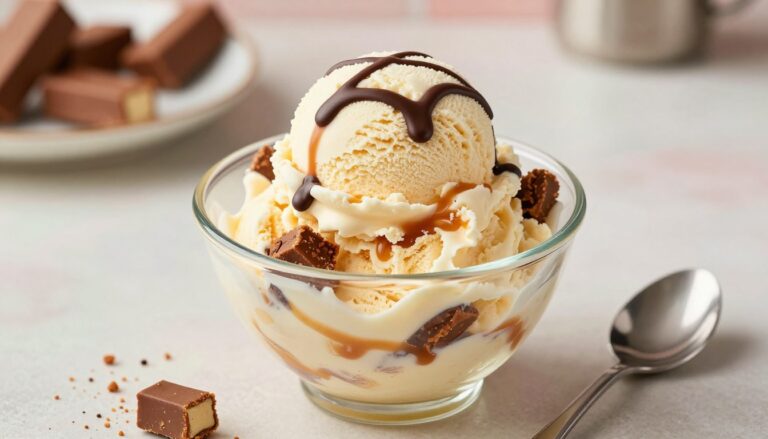
- Crushed cookies like Oreos, chocolate chips, and M&M’s or Snickers pieces.
- Fruit add-ons: sliced strawberries, berry compote, or a spoon of strawberry or blackberry jam for bright contrast.
Pairing ideas for the dessert table
Set the bowl beside peach or blueberry cobbler, Dutch oven cherry cobbler, or apple crumb pie. A scoop on the side lifts each slice and makes the table feel abundant.
Resting and leftover tips
Freshly churned may be soft-serve; let it rest about 30 minutes in the freezer for firmer scoops. For stored batches, remove from the freezer 10–15 minutes before serving so scoops go down smooth.
Conclusion
Close the process with a short checklist so every batch becomes reliably smooth, scoopable, and safe to share.
Start with a simple base of milk, cream, sugar, vanilla, and eggs. Let the maker churn that mixture against layers of ice and rock salt until the motor slows — that stop is your cue that the batch is done.
Respect the fill line, set the unit in a sink or on a patio, and wipe the lid and rim before opening. For firmer scoops freeze 3–4 hours; for easy serving, let frozen ice cream rest 10–15 minutes.
Be flexible: keep it pure, add evaporated or condensed milk for richness, or use brown sugar for warmth. Choose raw eggs, pasteurized eggs, or heat the base to 160°F based on who you’re serving.
Make a batch, keep notes on your favorite vanilla and mix-ins, and share this old fashioned treat at your next backyard gathering.
FAQ
What makes this old-fashioned vanilla feel like a true summer favorite?
Do I need a vintage-style ice cream maker to get authentic results?
How important is rock salt and ice for the freezing process?
Should I cook the egg yolks in the base or skip them?
What can I substitute if I don’t have heavy cream or whole milk?
How long does it take to churn and properly harden in the freezer?
How do I prevent icy or grainy texture in the finished dessert?
What are quick mix-ins and toppings that elevate homemade vanilla?
Can I make this recipe without a machine?
How do I store leftovers to keep flavor and texture?