
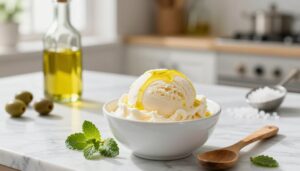
Olive Oil Ice Cream
6
servings20
minutes10
minutes250
kcalCreamy, smooth olive oil ice cream with a delightful flavor.
Keep the screen of your device on
Ingredients
1.5 cups 1.5 whole milk
3/4 cup 3/4 granulated sugar
1 pinch 1 salt
1 tsp 1 vanilla extract
3 large 3 eggs
1.5 cups 1.5 heavy cream
1/2 cup 1/2 extra virgin olive oil
Directions
- In a medium saucepan, combine whole milk with sugar and a pinch of salt. Heat over medium heat, stirring until the sugar dissolves.
- Remove the milk mixture from heat and stir in vanilla extract. Allow it to cool slightly for about 5 minutes.
- In a separate bowl, whisk the eggs until they are light and fluffy, ensuring an even consistency throughout.
- Slowly temper the eggs by gradually whisking in the warm milk mixture, doing this in small increments to prevent the eggs from cooking.
- Return the combined mixture to the saucepan and cook over low heat, stirring constantly, until the mixture thickens slightly and coats the back of a spoon.
- Remove the saucepan from heat and let the custard cool completely, about 1 hour, then refrigerate for at least 2 hours or overnight for best results.
- Once chilled, blend in the heavy cream and olive oil until fully incorporated into the mixture, ensuring a smooth consistency.
- Pour the mixture into an ice cream maker and churn following the manufacturer’s instructions, typically about 20 to 25 minutes.
- Transfer the churned ice cream to a freezer-safe container and freeze until solid, which usually takes about 4 hours.
Nutrition Facts
- Serving Size: 100g
- Total number of serves: 6
- Calories: 250kcal
- Fat: 18g
- Saturated Fat: 9g
- Trans Fat: 0g
- Polyunsaturated Fat: 1g
- Monounsaturated Fat: 7g
- Cholesterol: 116mg
- Sodium: 42mg
- Potassium: 112mg
- Carbohydrates: 22g
- Fiber: 0g
- Sugar: 21g
- Protein: 4g
- Vitamin A: 500IU
- Vitamin C: 0mg
- Calcium: 100mg
- Iron: 0mg
- Vitamin D: 0mg
- Vitamin E: 0mg
- Vitamin K: 0mg
- Thiamin: 0mg
- Riboflavin: 0mg
- Niacin: 0mg
- Vitamin B6: 0mg
- Vitamin B12: 0mg
- Folate: 0mg
- Biotin: 0mg
- Pantothenic Acid: 0mg
- Phosphorus: 0mg
- Iodine: 0mg
- Magnesium: 0mg
- Zinc: 0mg
- Selenium: 0mg
- Copper: 0mg
- Manganese: 0mg
- Chromium: 0mg
- Molybdenum: 0mg
- Chloride: 0mg
Did you make this recipe?
Tag @https://www.instagram.com/ice_cream_haven/ on Instagram and hashtag it with #IceCreamIceCreamHavens
Like this recipe?
Follow @https://www.pinterest.com/Ice_Cream_Haven/ on Pinterest
Join our Facebook Group!
Follow https://www.facebook.com/icecreamhavens/ on Facebook
Why Olive Oil Belongs in Ice Cream
High-quality, fresh extra virgin brings both fat and fragrance to frozen desserts. It smooths the base and adds delicate notes—ripe fruit, citrus, roasted nuts, fresh-cut grass, or a faint peppery finish depending on the bottle.
What extra virgin adds to flavor and texture
Think silk, not salad dressing. The extra fat helps create a lush mouthfeel so each scoop feels luxurious. At the same time, fragile fruity and herbaceous aromas shine if you add the oil late, just before churning.
Olive oil ice cream vs gelato at home
True gelato has less air and is served a bit warmer. Most home machines freeze slower, so you’ll end up with a denser ice cream style. You can chase gelato by using more milk and serving warmer, but this guide focuses on dependable home results.
Why a pinch of salt makes flavors pop
Cold dulls taste buds. A tiny pinch of salt amplifies sweetness and the delicate oil aroma. Use fleur de sel as a finishing touch for a subtle sea note, or fine sea/kosher salt if you prefer a practical swap.
- Balance: sugar and dairy soften any savory edge.
- Timing: add the oil late to keep its nuance.
- Vanilla: use sparingly so the extra virgin remains central.
Ingredients for a Creamy Homemade Ice Cream Base

Start by choosing the dairy path that matches the texture you want: rich and dense or light and flavor-forward. That choice shapes the rest of your plan and makes the cooking simpler.
Dairy options and texture trade-offs
Use half-and-half as a convenient shortcut for a smooth, stable cream base. Or blend whole milk with heavy cream for more control over richness.
More cream = richer and denser; more milk = lighter and more flavor-forward.
Custard essentials
Egg yolks provide emulsification and body. Sugar softens freezing and balances taste. A pinch of salt brightens the frozen dessert.
Stick to the called-for egg yolks so the base thickens enough to feel premium after freezing.
Optional aromatics and a quick checklist
Steep a small piece of lemon peel in the chilled custard for subtle brightness that flatters olive oil notes. Reduce or skip vanilla so the main flavor stays central.
- Preview measures: cups of milk/cream, 1–2 egg yolks per cup, teaspoon-level salt and vanilla optional.
- Mixture mindset: build a smooth base in a bowl now to avoid textural problems later.
How to Choose the Best Extra Virgin Olive Oil for Ice Cream

Start by choosing a light, fruity bottle that tastes pleasant straight from a spoon. The character you enjoy raw will carry into the frozen dish, so pick one that feels balanced and fresh.
Go fruity and light-bodied
Look for gentle ripe-fruit notes, mild nuttiness, or buttery hints rather than sharp pepper or grassy bite. Peppery bottles can become harsh when chilled and may overpower sweetness in the final treat.
Freshness matters: quick taste test
Pour a small amount, sniff it, and taste. If it tastes stale, bitter, or like paint, discard it. A fresh bottle reads bright and clean on the palate.
Label cues and varietals
Search for clearest signals of quality: claims like extra virgin and phrases such as cold-pressed or cold-extraction. Low acidity notes are useful when listed. Varieties like Koroneiki or Arbequina often deliver the gentle fruit profile many home cooks prefer.
- Simple goal: choose a bottle you enjoy plain — its character shows up in the dessert.
- Storage: cap tightly and keep away from heat or light to preserve quality.
- Budget note: freshness matters more than price — a modest, fresh bottle trumps an old expensive one.
For curated selections and ideas, see these best olive oil picks to help narrow choices before you start the recipe.
olive oil ice cream recipe: Step-by-Step Method (Custard + Churn)

Start with precise heating and tempering to build a glossy custard that churns into luxury texture.
Prep your tools: gather a large bowl, a fine mesh sieve, a reliable thermometer, and your ice cream maker. Pre-chill the machine bowl if required and set an ice bath to speed cooling.
Heat the dairy
Warm heavy cream, milk, sugar, and a pinch of salt just to steaming. Watch for tiny bubbles at the edges—do not boil. This avoids grainy texture and eggy notes.
Temper the yolks
Whisk egg yolks in a bowl. Slowly drizzle hot dairy into yolks while whisking constantly. This prevents scrambling and keeps the mixture glossy.
Cook to thickness and chill
Return the mixture to low heat and stir until it coats the back of a spoon and reaches 165°F–175°F. Remove immediately and strain through the fine mesh sieve for an ultra-smooth ice cream base.
Press plastic wrap directly on the surface to prevent a skin, then refrigerate for at least 3–4 hours or overnight until fully cold.
Finishing and churn tips
Add extra virgin olive to the fully chilled base just before churning so the delicate flavor stays vivid. If the oil looks separated, whisk vigorously for about a minute until smooth.
- Final step: Churn per manufacturer instructions to soft-serve consistency.
- Freeze time: firm in the freezer after churning.
- Quick fix: if separation appears after chilling, warm 2–3 tablespoons briefly and whisk back in.
Churning, Freezing, and Storage for Scoopable Texture

Fresh from the churn, the mixture holds shape loosely; the freezer gives it the clean edges you want for serving.
Churn to soft-serve, then freeze to firm. Right out of an ice cream maker or a premium cream maker, your batch will be soft. Transfer it to a shallow, freezer-safe container for even cooling.
Timing: freeze at least 2 hours, but aim for overnight to get picture-perfect scoops. Label the container with the date so you know when you made it.
Prevent freezer burn and keep flavor pure
Smooth the surface, then press parchment or plastic wrap directly on top before sealing the lid. This simple step stops ice crystals and preserves the delicate olive oil notes.
Storage timeline and serving tips
For best texture, eat within a few weeks. Homemade ice cream lacks commercial stabilizers, so its texture changes faster over time.
“A quick overnight freeze turns soft-serve into scoop-ready dessert with clean edges.”
- Use a shallow container for faster firming.
- Let the container sit 5–10 minutes at room temp before scooping.
- Seal tightly to prevent odor transfer in the freezer.
Make sure your ice cream maker did its job: churning builds structure, but proper freezing and storage preserve that structure for hours and weeks to come.
Conclusion
A rich custard folded with a vivid finishing drizzle creates a scoop that feels both familiar and new.
Pick a fresh, fruity extra virgin olive you enjoy tasting plain — it becomes the signature flavor of the final ice cream.
Add the oil to a fully chilled cream base so its delicate notes stay bright. Protect the surface during freezing with plastic or parchment to avoid freezer burn.
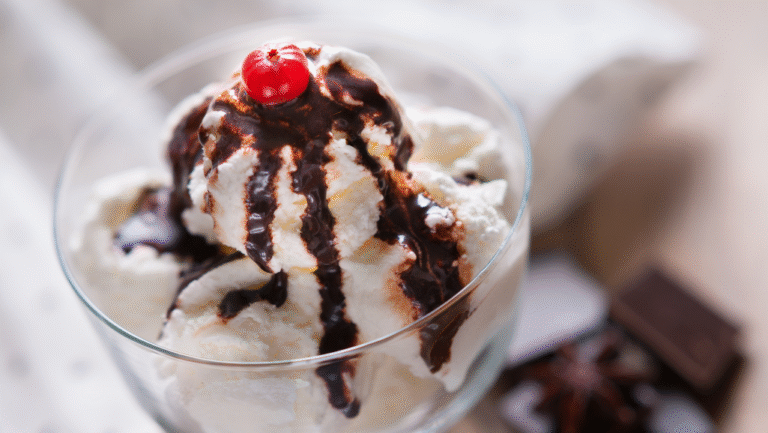
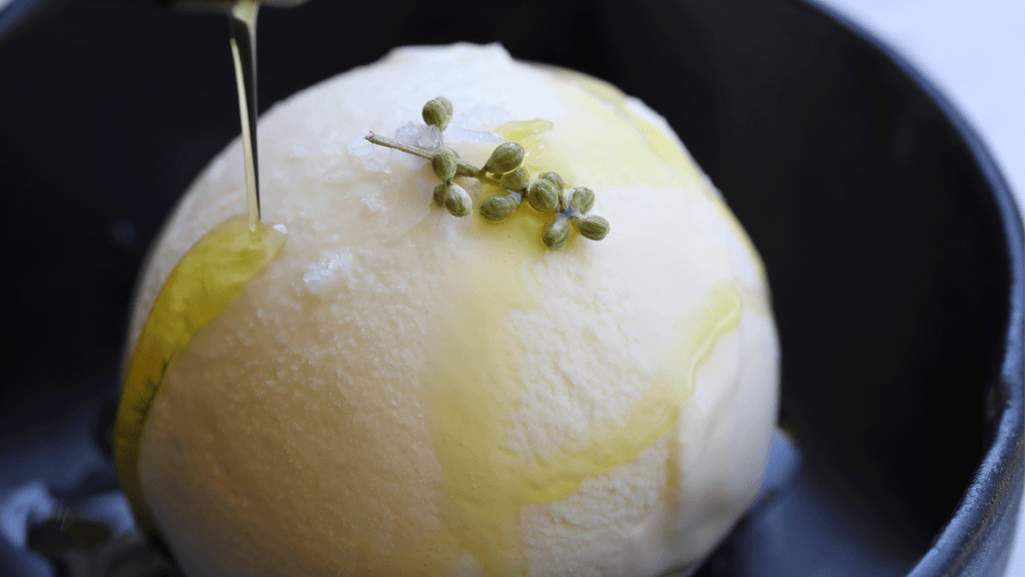
Finish elegantly: a few flakes of salt, a tiny drizzle of oil, and a whisper of lemon zest. Serve with berries, stone fruit, dark chocolate sauce, or aged balsamic for contrast.
Experiment with peel, dairy ratios, or a slightly lower amount of oil. If the mixture looks separated, whisk gently and give it time; the texture will come back.
FAQ
What makes extra virgin olive oil a good match for frozen desserts?
How does this version differ from gelato you buy at a shop?
Why add a pinch of fleur de sel or sea salt?
Can I use half-and-half instead of whole milk and heavy cream?
Are egg yolks necessary for a custard base?
Should I steep lemon peel or add vanilla, and when should I skip aromatics?
How do I pick the best extra virgin bottle for this dessert?
How can I tell if an oil has gone bitter or rancid?
What tools do I need before starting?
How hot should I warm the dairy mixture?
How do I temper egg yolks without scrambling?
What is the target temperature when cooking the custard?
How long should I chill the base before churning?
When should I add the oil for best flavor?
What if the oil looks separated after adding it?
How long do I churn before freezing?
How can I prevent freezer burn on the finished product?
What is the ideal storage timeline for best texture?
Any tips for serving and pairing?